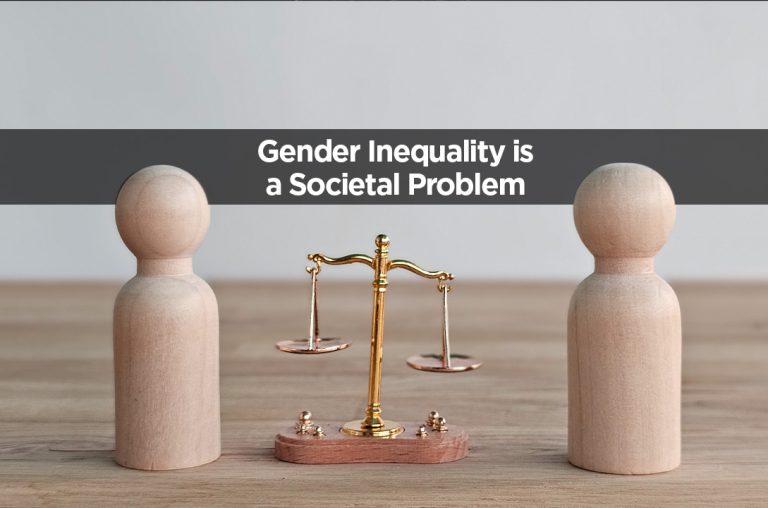
Although women’s labor force participation in Türkiye has increased in the long term, the pace of growth has slowed markedly in recent years. According to information provided by Prof. Dr. Figen Yıldırım, Dean of the Faculty of Economics, Administrative and Social Sciences at İstinye Üniversitesi, current data indicate that the issue cannot be resolved solely through job creation; structural barriers such as care responsibilities, the glass ceiling, and wage inequality must be addressed simultaneously.
Women’s labor force participation is a key indicator reflecting not only a country’s economic performance but also its level of social equality and the effectiveness of its social policies. While the upward global trend in female employment continues, the momentum has slowed in recent years. According to Prof. Dr. Figen Yıldırım, women’s participation in the labor force in Türkiye is increasing but remains below both global and European Union averages. Experts interpret this situation as evidence of persistent structural barriers affecting women’s access to employment and career advancement.
“The increase in women’s labor force participation has slowed”
Yıldırım notes that the recent deceleration in growth is significant:
“The female labor force participation rate indicates the proportion of working-age women who are either employed or actively seeking employment. This measure reflects not only economic growth but also social equality, educational attainment, and the effectiveness of social policies. Globally, although women’s participation has followed a long-term upward trend, the rate of increase has slowed in recent years. According to data from the International Labour Organization and the World Bank, the global female labor force participation rate is currently around 50 percent. After 2014, increases continued particularly in developing countries; however, the post-pandemic recovery has constrained this momentum. A participation gap of approximately 18–20 percentage points between men and women persists worldwide.”
Women’s labor force participation in Türkiye is rising
Emphasizing that progress in Türkiye remains fragile, Yıldırım continues:
“According to data from the World Bank and Türkiye İstatistik Kurumu, the female labor force participation rate in Türkiye increased from approximately 27.9 percent in 2002 to 35.8 percent in 2023, reaching around 36 percent in 2024. While this indicates long-term progress, the growth rate has declined noticeably over the past five years. The pandemic negatively affected female employment, and the recovery has been limited. Thus, although the overall trend is upward, the pace has weakened. Moreover, aggregate participation figures alone are insufficient; disaggregated data reveal a more striking picture. While women’s employment rates fluctuate between roughly 31–35 percent, their representation in managerial positions remains around 20 percent—well below European Union levels. In other words, women in Türkiye face difficulties not only entering employment but also advancing upward due to a pronounced ‘glass ceiling.’”
“In the EU, women’s employment has reached 70.8 percent”
Highlighting the contrasting European context, Yıldırım explains:
“In European Union countries, the situation differs considerably. According to Eurostat data, women’s employment in the EU has reached approximately 70.8 percent. Female participation is both high and stable. Over the past decade, white-collar female employment has increased steadily, while the share of blue-collar female employment has declined. This shift suggests that occupational transformation and the transition toward qualified employment have been managed more systematically for women in Europe. Nevertheless, even in the EU, women remain underrepresented in senior and decision-making roles relative to their overall employment share. Thus, Europe’s primary challenge concerns upward mobility, whereas Türkiye faces challenges in both participation and advancement. Between 2014 and 2023, although white-collar female employment increased in Türkiye, this rise was not proportionally reflected in managerial positions.”
“The proportion of female managers remains around 20 percent”
Addressing the main challenges women face in working life, Yıldırım states:
“The obstacles confronting women in the labor market are multifaceted, encompassing structural, cultural, and institutional dimensions. Despite an upward trend, women’s labor force participation in Türkiye remains well below EU and global averages, indicating that the issue cannot be explained by economic factors alone. One of the most fundamental barriers is the disproportionate care burden placed on women. Insufficient public services for childcare, elder care, and patient care—combined with the limited availability of flexible work arrangements—negatively affect both women’s entry into and retention within employment. Career progression represents another critical area. Even when women enter the workforce, they encounter a significant glass ceiling in advancing to managerial roles, as reflected in the approximately 20 percent share of female managers. Gender norms, implicit biases, and wage inequality further reinforce this pattern. International experience demonstrates that sustainable progress requires integrated policies combining education, care infrastructure, flexible work arrangements, and equality-oriented reforms.”
“Wage inequality is not destiny”
Yıldırım emphasizes that gender-based pay disparities are structural:
“According to data from Organisation for Economic Co-operation and Development and TÜİK, women’s average earnings in Türkiye are approximately 15–20 percent lower than men’s. Although this gap narrows with higher education levels, it does not disappear entirely. The disparity stems less from direct violations of the ‘equal pay for equal work’ principle and more from indirect structural mechanisms. Women are concentrated in lower-paying sectors and positions, often in service industries or informal and part-time employment, whereas men are more prevalent in sectors offering higher wages and promotion opportunities. Career interruptions related to childcare and caregiving responsibilities further slow women’s advancement and may compel them to accept lower-paid flexible positions. Underrepresentation in managerial roles, implicit bias, disadvantages in wage negotiations, and opaque pay policies also deepen the gap. International examples show that the problem is solvable: equal pay certification in Iceland and forthcoming EU pay transparency regulations are effective instruments. In Türkiye, enhancing pay transparency, establishing objective wage and promotion systems, conducting regular pay equity analyses, and strengthening policies that support women’s advancement into leadership are essential. Wage inequality is not inevitable; it can be sustainably reduced through coordinated action by the public and private sectors.”
“A comprehensive and determined transformation is required”
Regarding measures to increase women’s labor force participation, Yıldırım concludes:
“For Türkiye to achieve a genuine leap in female employment, fragmented solutions must be replaced by a comprehensive and determined reform agenda. Creating jobs alone is insufficient; structural constraints on women’s participation must be addressed simultaneously. Strengthening public mechanisms that alleviate care burdens—particularly widespread childcare and eldercare services—produces the fastest and most lasting effects. A second critical area is the expansion of flexible yet secure work models, including remote work, flexible hours, and socially protected part-time employment, which enhance women’s long-term attachment to the labor market. European Union experience confirms the effectiveness of these approaches. Sustainable transformation also requires improved access for women to managerial and decision-making positions through transparent promotion systems, mentorship programs, and gender balance targets in senior leadership. In this context, the Women’s Organized Industrial Zone project developed through cooperation between USİKAD and İstinye University offers an integrated model uniting the public sector, private sector, and academia. By combining care infrastructure, qualified employment, and leadership programs, this initiative represents a scalable example of collaboration aimed at integrating women into the entire value chain—from production to management. Expanding women-focused public and private initiatives generates not only awareness but also durable solutions. Genuine equality ultimately begins with raising girls as empowered individuals within the family and as strong actors in professional life.”