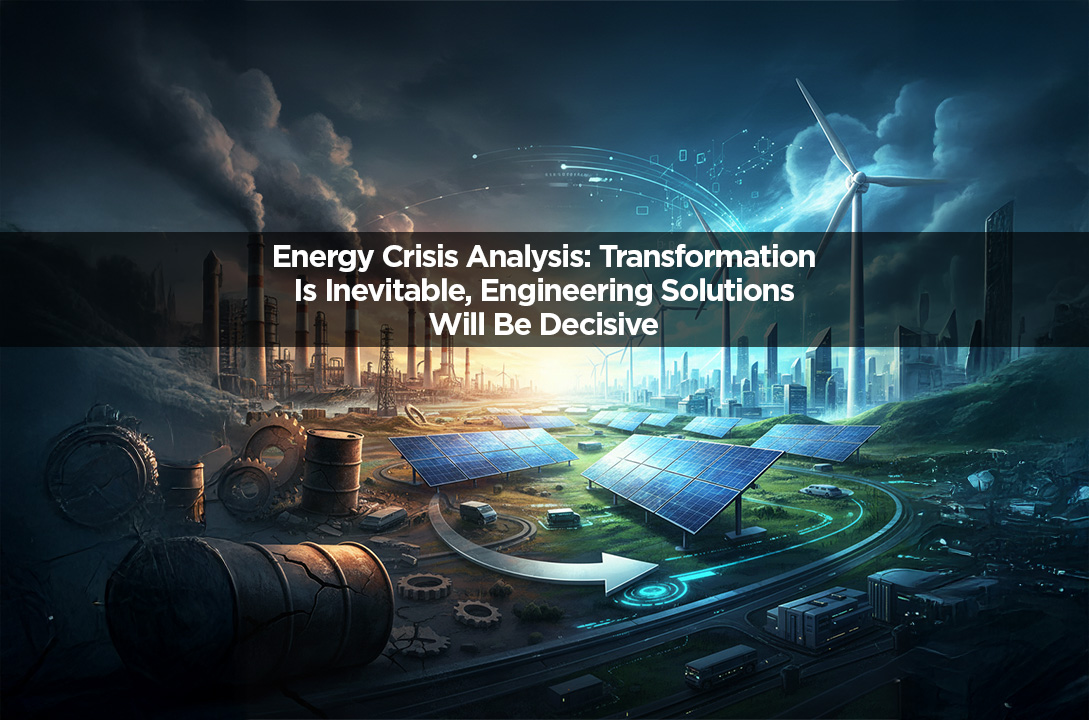
Energy Crisis Analysis: Inevitable Transformation and the Decisive Role of Engineering Solutions
Prof. Dr. Bestami Özkaya, Vice Rector of Istinye University, provided comprehensive evaluations spanning from the causes of the global energy crisis to emerging energy technologies of the future. He emphasized that “the energy sector is undergoing a profound transformation driven by global crises and mounting climate pressures.” Prof. Dr. Özkaya noted that global demand for fossil fuels is expected to peak by 2030 and subsequently decline, while solar and wind energy will increasingly dominate electricity generation due to their cost advantages.
Structural Causes of the Energy Crisis: Supply Disruptions and Price Imbalances
According to Prof. Dr. Özkaya, the primary drivers of the global energy crisis include rapidly rising demand combined with supply disruptions and price volatility caused by geopolitical shocks—such as wars and political instability—affecting fossil fuels, particularly oil and natural gas. The crisis has clearly exposed the inadequacy of current energy systems in terms of sustainability and security of supply. Continued overreliance on conventional fossil fuels, coupled with insufficient investment in infrastructure and energy storage during the transition to renewables, has deepened the structural dimensions of the crisis and posed serious threats to global economic stability. Geopolitical conflicts, notably the Russia–Ukraine war, have further constrained energy supply and driven prices upward.
In this challenging context, Prof. Dr. Özkaya stressed the growing importance of academic institutions in guiding society and industry through expertise in innovative energy solutions, energy efficiency, and smart grid technologies.
Climate Change and Extreme Weather Events Undermine Energy Production
Climate change and extreme weather events increasingly disrupt energy production. Hurricanes, storms, floods, and droughts damage energy infrastructure; for instance, power plants in Cuba have suffered severe destruction due to extreme weather. Drought conditions reduce hydroelectric generation, while excessive heat lowers the efficiency of thermal and nuclear power plants. Storms and floods also damage transmission lines, limiting grid resilience. Transitioning to clean energy sources—such as solar, wind, biomass, and geothermal—reduces dependence on fossil fuels, lowers emissions, and supports sustainable economic growth.
Smart Logistics and Data-Driven Infrastructure Management as Strategic Priorities
Existing global energy infrastructures remain vulnerable due to extreme weather, cyber threats, and centralized system architectures. Therefore, modernization efforts—particularly through Smart Grids and Distributed Energy Generation Systems (e.g., microgrids)—are essential to enhance grid flexibility and security against climatic and geopolitical risks.
Within this framework, events such as İSÜ CONNECTOM’s “SOLAR ROOF – Green Energy Transformation” seminar and the LMSCM2024 Congress have facilitated the dissemination of engineering-based solutions for energy transition and smart city applications within the university ecosystem. Increasing demand, climate risks, and urbanization pressures have made smart logistics, data-driven infrastructure management, and disaster resilience planning critical priorities.
Renewable Energy Integration and Waste Heat Recovery Technologies Gain Prominence
In the field of energy efficiency—one of the most rapid and cost-effective responses to the energy crisis—engineering disciplines are increasingly focused on smart systems and innovative technologies. Key solutions include Smart Building Management Systems (BMS), industrial energy recovery systems, high-efficiency materials, renewable energy integration, and waste heat recovery technologies. According to the International Energy Agency (IEA), such technologies could contribute up to 40% toward achieving the 2050 net-zero target.
Projects and activities conducted at Istinye University demonstrate the practical applicability of future-oriented energy efficiency solutions, including artificial intelligence–based systems, sensor-driven energy management, and high-efficiency electronic designs.
Energy Storage: The Strategic Importance of BESS and Green Hydrogen
Energy storage technologies—particularly Battery Energy Storage Systems (BESS) and green hydrogen solutions—play a critical role in managing the energy crisis. Storage systems balance the intermittency of renewable energy sources, ensure continuity of supply, and support grids during failures or peak demand periods. In the long term, seasonal and large-scale storage solutions will accelerate energy transition by reducing dependence on fossil fuels.
Activities organized by the İSÜ IEEE Student Branch highlight the strategic importance of these technologies in enhancing energy efficiency, particularly in transportation systems.
Investments Must Prioritize System Integration and Flexibility
To accelerate energy transition and achieve sustainable energy targets, engineering investments must focus on enhancing system integration and flexibility. Key priorities include high-capacity energy storage (BESS and green hydrogen), smart grid modernization, strengthening transmission and distribution infrastructure, and advanced materials and manufacturing technologies. These areas are essential for ensuring energy security amid global crises and for reducing carbon emissions.
Projects at Istinye University—such as photocatalytic hydrogen production and electric vehicle charging infrastructure—directly contribute to the development of high-efficiency, sustainable technologies and support the broader energy transition.
A Profound Transformation of the Energy Sector
The energy sector is undergoing a fundamental transformation driven by global crises and climate pressures. By 2030, fossil fuel demand is expected to peak and then decline, while solar and wind energy will gain prominence in electricity generation due to cost advantages. Electric vehicles will reduce oil demand, and energy storage technologies will stabilize intermittent generation.
Türkiye aims to quadruple its wind and solar capacity and accelerate investments in energy storage. Within the framework of the 2053 net-zero vision, natural gas will serve as a transition fuel, while renewable energy will remain a strategic priority. The year 2030 will not mark the end of the energy crisis but rather a turning point characterized by deep systemic transformation requiring strong policies and sustained investments.
Rising Demand for a Qualified Workforce in the Energy Transition
Energy engineering has increasingly become a focal area for academia, civil society organizations, and public institutions. In the Council of Higher Education’s (YÖK) Future Professions initiative, programs such as Renewable Energy Technology and Hydrogen and Energy Storage Technology have been included in the 2025 YKS Preference Guide.
Rapid global change has significantly increased demand for a qualified workforce in the energy transition. International organizations such as IRENA and the World Bank report growing employment in solar, wind, battery manufacturing, hydrogen technologies, and grid modernization. Initiatives such as Skills for the Green Transition, Energy Workforce Development Initiative, and Green Talent Strategy further underscore educational priorities in this field.
Energy Sector Priorities in Türkiye’s 12th Development Plan
The 12th Development Plan identifies the energy sector as a priority area, setting targets for primary energy demand, electricity consumption, renewable installed capacity, energy efficiency, and battery storage capacity. The Energy Efficiency and Environment Department (EVÇED) conducts international training and capacity-building projects, including programs on Energy Efficiency and Management in Industry implemented in cooperation with JICA and TİKA. Under the YEVDES Project, technical support has been provided to municipalities and universities.
EVÇED’s membership in the European Energy Network (EnR) and strategic cooperation with Denmark further strengthen policy development and capacity-building efforts in renewable energy, energy efficiency, and low-carbon heating and cooling systems.
Examples of Smart and Sustainable Energy Solutions in Türkiye
Contemporary energy management prioritizes renewable-based systems that deliver high efficiency and energy savings. Smart energy grids, energy storage systems, intelligent generation and distribution, remote monitoring and automation (SCADA), distributed generation management, and alternative energy systems enhance resource efficiency and grid security. Smart meters, LED lighting, and energy monitoring systems enable demand-driven optimization and savings.
In Türkiye, projects such as the Mardin Solar Power Plant, Manisa Electric Bus Project, İzmir Balçova Geothermal Project, and Balıkesir Landfill Gas-to-Energy Facility exemplify smart and sustainable energy solutions.
Ongoing Projects at Istinye University
Istinye University is actively conducting projects such as “Waste-to-Energy Conversion” and “Design Software for MeV Energy Electron Accelerators.” In addition, green hydrogen production projects utilizing nanoporous photocatalysts and AI-supported bio-electrochemical systems are supported through national and international applications.
The Clean Energy Research Center established at the university aims to advance green energy research and contribute to a sustainable future. Within this context, the 10th International Hydrogen Technologies Congress (IHTEC) will be hosted by Istinye University in Istanbul from 10–13 May 2026, bringing together experts to discuss current scientific and technological developments in hydrogen production, storage, transportation, safety, industrial applications, and policy.