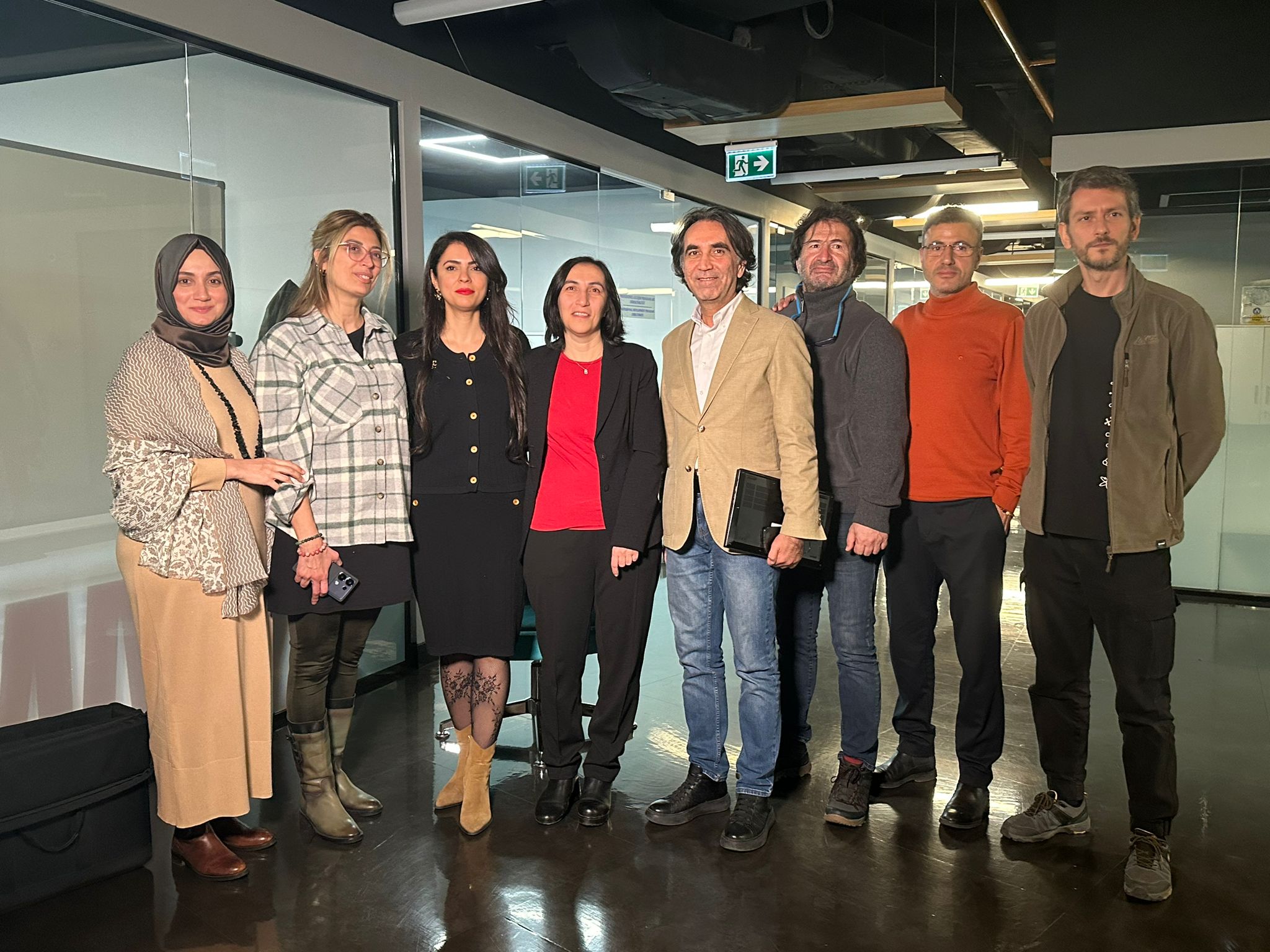
Artificial intelligence and technology have become an inseparable part of our lives. However, as with everything, excessive reliance on them can be harmful. Assoc. Prof. Dr. Şebnem Özdemir, a faculty member in the Management Information Systems Department at the Faculty of Economics, Administrative, and Social Sciences at Istinye University, warns of an upcoming era of addictive artificial intelligence. Emphasizing the importance of preparing for this shift, Özdemir stated, “We must raise children with strong questioning abilities and critical thinking skills.”
It is undeniable that artificial intelligence and the technology evolving alongside it have made life easier. However, just like anything else, excessive dependence on these conveniences can have negative consequences. Sharing insights from a report by the Massachusetts Institute of Technology (MIT), Özdemir highlighted that the future will usher in an era of addictive AI. She particularly noted that children who lack sufficient support from their families and struggle with social acceptance tend to seek companionship in machines, entities that never judge them and always provide responses. She warned that this tendency could lead to the “era of addictive artificial intelligence” and emphasized the need for parental intervention, stating, “As parents, we must take precautions.”
“If we fail to instill curiosity, it will undermine memory and learning processes.”
Dr. Özdemir pointed out that if children are not encouraged to develop curiosity and problem-solving skills, AI could damage their long-term memory and hinder their learning processes. She elaborated:
“The way we use a tool can either benefit or harm us. Therefore, it would not be accurate to assume that AI will either completely foster laziness or completely drive progress. However, if we fail to instill in children the ability to seek knowledge, cultivate curiosity, and approach learning with skepticism and perseverance, scientific research indicates that AI will indeed impair their long-term memory and disrupt their learning processes. This is precisely where parents and teachers play a crucial role.
We must nurture children who are skilled in asking questions and thinking critically. Questions like ‘What is knowledge?’ or ‘What is a cat?’ are not enough. We need thought-provoking questions that stimulate creativity—questions whose answers cannot simply be found in a book or memorized. When we engage children with such inquiries, we will witness the growth of their memory, vision, and abilities while they interact with artificial intelligence.”
“Unlike any other tool we use, AI is an intelligent entity.”
Providing insights into AI literacy, Özdemir explained:
“AI literacy means understanding the limitations, benefits, advantages, and disadvantages of artificial intelligence. It involves comprehending the technologies it uses, the positive and negative aspects of machines, and potential risks—then communicating this knowledge effectively to children.
When we consider AI literacy, we are talking about mastering every aspect of a tool, much like knowing how to operate a television remote or a musical instrument. However, unlike any other tool we use, artificial intelligence is an intelligent entity. Therefore, a child interacting with AI is not merely dealing with a machine; they are engaging with an intelligent consciousness—one that can be influenced, one that records interactions, and one that learns from them. Children must be made aware of this reality and understand how AI perceives and responds to them.”
By emphasizing the importance of understanding AI, Özdemir underscored how crucial it is for both adults and children to develop a conscious and responsible approach toward artificial intelligence.