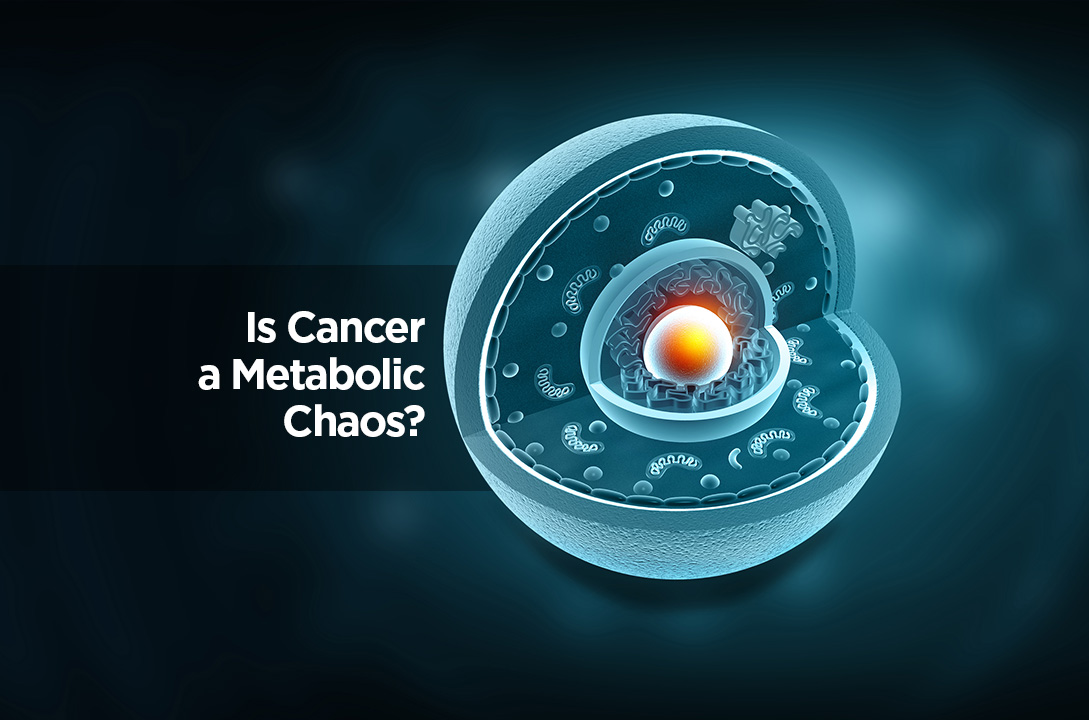
When defining cancer, the first concept that typically comes to mind is “uncontrolled cell division.” However, in recent years, scientists worldwide have accumulated compelling evidence indicating that cancer is not merely a disease arising from malfunctioning genes, but also fundamentally a metabolic disease. This perspective helps us understand cancer not simply as endless cellular proliferation, but as an abnormal metabolic state characterized by disrupted energy production and biomolecular processing pathways.
Cells require various building blocks—such as glucose, amino acids, lipids, nucleotides, and vitamins—as well as energy to sustain life. This energy is derived from macronutrients, including carbohydrates, fats, and proteins, obtained through diet. Healthy human cells primarily utilize glucose for energy production via oxidative phosphorylation, a highly efficient but relatively complex process that occurs in the presence of oxygen. In contrast, cancer cells preferentially metabolize glucose through rapid fermentation even when sufficient oxygen is available, a phenomenon long recognized in the scientific community as the Warburg effect. The Warburg effect describes the conversion of glucose into energy through a faster yet less efficient pathway and represents a fundamental hallmark of the aggressive, utility-driven nature of cancer metabolism. Importantly, this metabolic reprogramming not only supports energy production but also fulfills the cell’s demand for raw materials by providing carbon skeletons required for DNA synthesis, protein production, and membrane biogenesis. Thus, cancer cells are able to proliferate rapidly while simultaneously generating their own structural components.
Emerging evidence further demonstrates that cancer cells exhibit remarkable metabolic flexibility, allowing them to dynamically adapt in order to survive under adverse conditions. Even when oxygen or nutrients are limited, cancer cells can tolerate these constraints and, if necessary, shift their metabolic priorities—switching from glucose utilization to fatty acid oxidation or amino acid metabolism as alternative energy sources. This metabolic adaptability plays a critical role in the development of treatment resistance.
Notably, these metabolic processes are not confined to the intracellular environment. Lifestyle factors, dietary habits, and environmental conditions exert profound effects on systemic metabolism, thereby shaping environments that may be either favorable or unfavorable for cancer development. For instance, high-sugar diets, obesity, and chronic hyperinsulinemia have been associated with increased cancer risk, whereas balanced nutrition, regular physical activity, and adequate sleep contribute to metabolic health and may reduce this risk.
Recent studies have shown that even the extent of daily light exposure can influence metabolic rhythms and alter lipid composition in the bloodstream. Chronic deficiency in daylight exposure is now recognized as a risk factor for metabolic disorders such as type 2 diabetes. Beyond differences between natural and artificial light exposure, the timing of sleep–wake and light–dark cycles has well-documented direct effects on metabolism. The circadian rhythm—the body’s internal biological clock—plays a crucial role in regulating hormone secretion and energy metabolism. Disruptions in sleep patterns and circadian rhythms have been shown to induce metabolic imbalance, impair immune function, and increase the risk of numerous chronic diseases, including cancer. Together, these findings highlight the importance of understanding metabolism as an integrated system operating at both cellular and whole-body levels. This emerging framework conceptualizes cancer not solely as a genetic disorder, but also as a metabolic dysregulation. In other words, cancer can be viewed as a metabolically driven ecosystem that necessitates a holistic evaluation of both intracellular biochemistry and systemic metabolic balance.
The body’s metabolism resembles a vast, intricately orchestrated network in which thousands of small molecules act simultaneously—comparable, more concretely, to a complex metropolitan subway system. In this analogy, metabolic pathways correspond to railway lines, enzymatic reactions serve as mechanical transitions that ensure trains safely reach the next station, and stations represent points where metabolites are generated, transformed, or redirected to alternative routes. Some stations are highly congested, much like major urban hubs, forming the main arteries of metabolism, while others are quieter yet strategically critical, capable of disrupting the entire system when impaired. A delay in one line—such as the accumulation or depletion of a metabolite—affects not only that route but all interconnected branches. This is precisely what is observed in cancer: certain metabolic routes are deliberately accelerated, others are shut down, and metabolic flux is repeatedly channeled through selected pathways, resulting in a chaotic rather than balanced system. From this perspective, cancer is not a malfunction at a single station, but a fundamentally restructured and dysregulated transportation network.
To truly comprehend this complexity, examining a handful of molecules or isolated intracellular pathways is no longer sufficient. Consequently, high-throughput analytical approaches have become indispensable. By analyzing blood, urine, and other biological fluids, it is now possible to generate a comprehensive inventory of intracellular metabolites. Determining which molecules are present, in what quantities, and which pathways are dominant or suppressed enables a truly integrative understanding. At this juncture, biomolecular omics sciences—such as genomics, transcriptomics, proteomics, metabolomics, lipidomics, and glycomics—play a pivotal role. Omics approaches allow us to view diseases not through a narrow window, but by examining the blueprint of the entire structure. Understanding the metabolic basis of complex, multifactorial diseases such as cancer fundamentally depends on this perspective.
It is precisely here that advanced technologies and analytical platforms come into play. For example, through our metabolomics analysis platform supported by the Thermo Scientific Stellar mass spectrometry system available at our institution, we are able to monitor molecular flux and metabolic profiles at exceptionally high resolution. This capability enables deeper insight into cancer cell behavior and facilitates the development of therapeutic strategies targeting metabolic alterations. By revealing the metabolic reprogramming of cancer—or, in other words, its restructured and chaotic metro map—we can move beyond merely identifying DNA mutations. We can also determine which metabolic pathways drive tumor development, when metastasis occurs, why treatment resistance emerges, and where metabolic vulnerabilities lie. Such technologies open new avenues for the development of more effective, targeted therapies with fewer adverse effects.
Moreover, metabolomics uniquely captures cellular events as they occur in real time. While genomics provides a comprehensive catalogue of what could happen within a cell, metabolomics answers the question: “What is happening right now?” In this sense, metabolomics serves as a bridge between genotype and phenotype, representing real-time functional biology. If genomics constitutes the city’s planning documents and road maps, metabolomics is the live traffic report, delivering immediate insight into the system’s current state.
In conclusion, cancer is no longer viewed solely as a disorder of uncontrolled cell proliferation. It is increasingly recognized as a condition characterized by disrupted energy supply–demand balance, abnormalities in membrane composition, resistance to programmed cell death pathways, the ability to reprogram survival strategies under all conditions, and the acquisition of profound metabolic flexibility. Cancer prevention, therefore, may be supported by strengthening metabolic resilience through lifestyle interventions—a realization that underscores the necessity of a multidimensional approach to achieving and maintaining health.