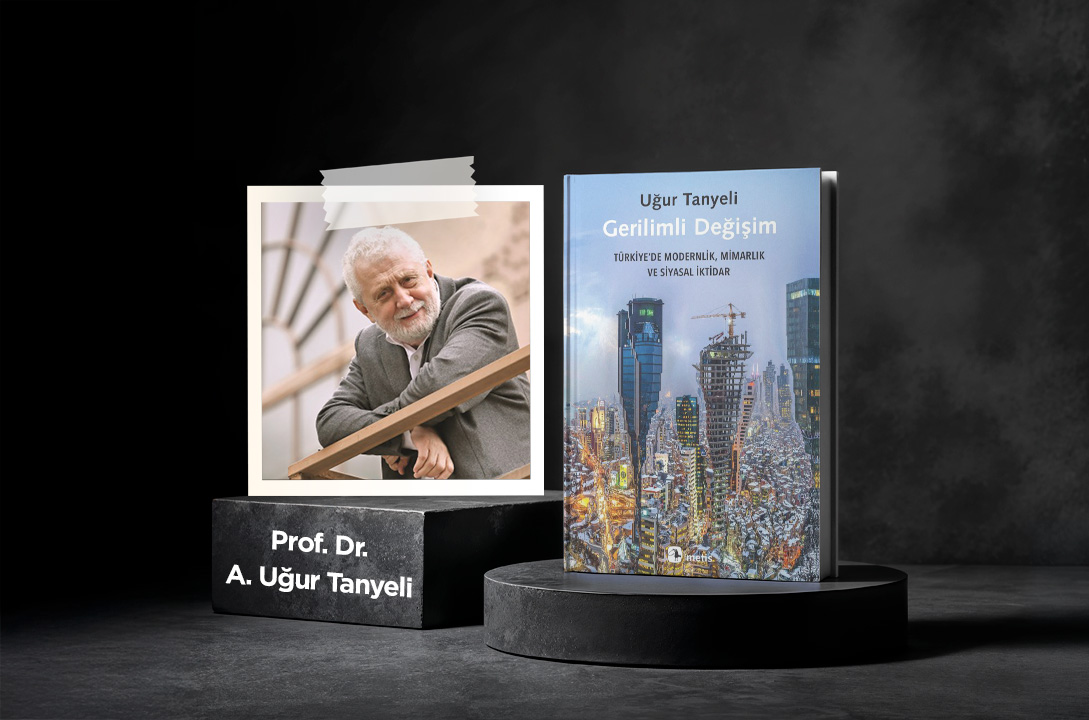
A book by Prof. Dr. A. Uğur Tanyeli, Advisor to the Rector of İstinye University, examining social and cultural transformations in the field of architecture in Turkey through the influence of the state and political power, has been published.
Social and cultural transformations inevitably generate tension. They eliminate the possibility for established practices, modes of thought, and even emotional dispositions to persist as they once did. What is new produces hesitation and anxiety at both societal and individual levels.
The same holds true in the field of architecture. Coming to terms with change, normalizing it, and reducing the tensions it produces become necessary. All the transformations discussed here can be understood as architectural policies—in the broadest sense—constructed to achieve precisely this. They are all related to the changing modes of practice and social perception of architecture. These transformations are produced by society; yet society remains perpetually suspicious of the normality of what it creates. Consequently, it also produces instruments to render them ordinary or at least tolerable.
In Turkey, one of the primary instruments has been the persistent tendency to attribute the will for change to the state or political power. This historical understanding—grounded in the assumption that the state or political authority is solely responsible for the construction of architecture and modernity—has a lineage in Turkey extending back to the Middle Ages. It manifests itself in the belief that the state, in architecture as in all other domains, is omnipotent.
During the period of modernization, the state is often assumed to have perceived the necessary direction of change and transformation earlier than anyone else, to have led its subjects, and even to have run ahead of society. In other periods, by contrast, it is argued that the same visionary power failed to be exercised. In either case, the state is identified as both the culprit and the cause. This book aims to interrogate this naïve ideological fixation.
The state is only one of many social actors. Society is not an ideological sponge in the hands of the state—nor is architecture. Accordingly, this book seeks to examine the idea that transformations in the architectural field are generated by non-state actors, extending the discussion from the professional identity of the architect to architectural historiography and broader social conceptions of architecture.