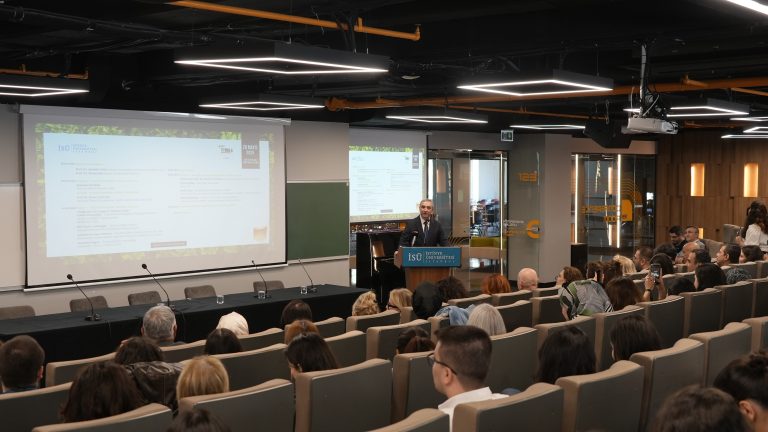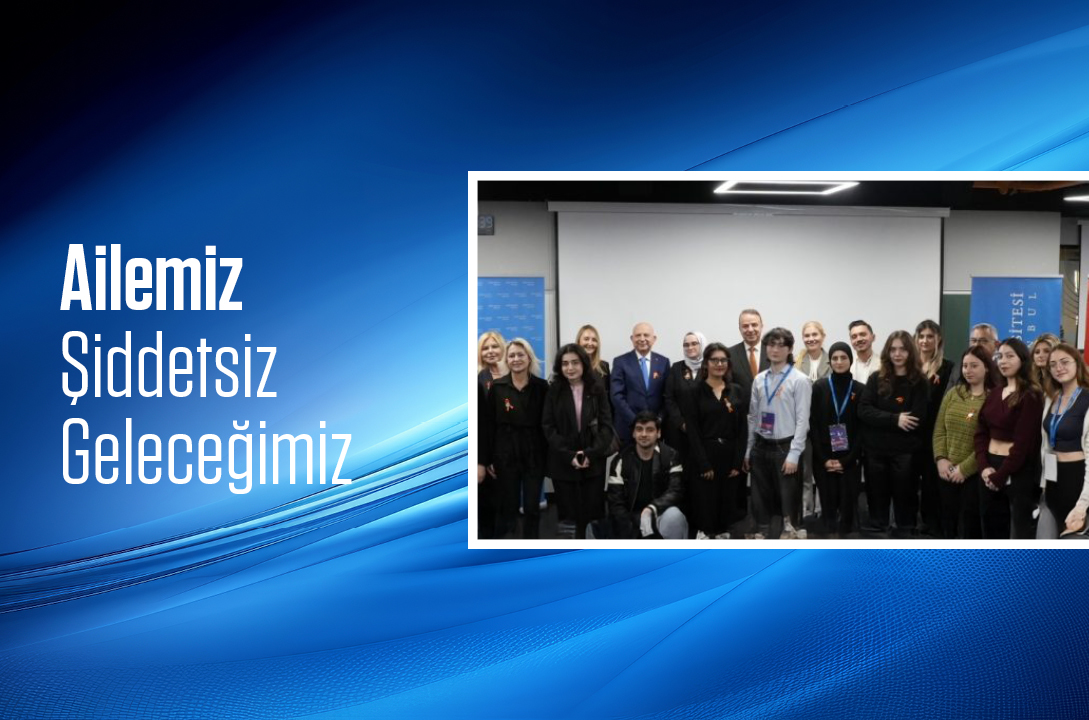
An event titled “Our Family, Our Violence-Free Future,” organized in collaboration with Istinye University and the Istanbul Provincial Directorate of Family and Social Services, was held on November 18, 2025, at our Vadi Campus. Distinguished speakers who attended the event shared their views on important steps to be taken to prevent violence against women and domestic violence.
A Joint Step Against Violence
The event, which addressed the themes of violence against women and domestic violence, was attended by officials from the Provincial Directorate of the Ministry of Family and Social Services and Kağıthane Municipality, as well as academics, representatives of non-governmental organizations, and public officials.
“Protecting the Family Is Possible by Eliminating Violence”
The opening speech was delivered by Prof. Dr. Işıl Baş De Oliveira, Director of the Gender and Women’s Studies Center at Istinye University and Dean of the Faculty of Humanities and Social Sciences. Emphasizing the importance of strengthening the family institution within the scope of the Year of the Family, Prof. Dr. Baş De Oliveira also drew attention to November 25, the International Day for the Elimination of Violence against Women. In her speech, she stated: “Protecting the family is possible by eliminating violence. The family is the fundamental building block of society. The peace and well-being of society depend on strong families.”
“The Family Is a Cell, and Its Core Is the Woman”
Highlighting the university’s sensitivity toward the issue of violence, our Rector, Prof. Dr. Erkan İbiş, stated, “The family is a cell, and the core of this cell is the woman.” Emphasizing the importance of understanding the role of women, he noted that the effects of violence should be evaluated carefully, stressing that its impact is not only physical but also psychological, creating long-term and lasting trauma.
Violence Should Be Examined from Childhood
Deputy Mayor of Kağıthane Municipality, Dr. Nedret Apaydın, emphasized that examining violence requires attention to childhood experiences. He also highlighted the importance of family communication and urban culture in preventing violence.
“Violence Is a Multi-Layered Problem That Disrupts Social Peace”
Rabia Güngör, Deputy Provincial Director of the Ministry of Family and Social Services, emphasized that the family is a valuable social asset and that all forms of violence must be confronted. She stated that the primary goal of the Ministry’s work is to build a violence-free society and underlined the importance of policies aimed at protecting women and children. She also noted that sustainable solutions to these issues require scientific approaches and the contributions of universities.
Informative Presentations Shared with Participants
Following the opening speeches, the program continued with presentations. Sociologist Esra Okumuş from the Kağıthane Social Service Center provided information about the activities and objectives of Social Service Centers, as well as preventive and supportive services. Subsequently, Prof. Dr. Ebru Şalcıoğlu Ertem from the Department of Psychology addressed different types of violence and shared valuable insights on domestic violence and violence against women.
All Questions Addressed
The second part of the program continued with a presentation titled “Violence Against Women in the Digital Age” by Assist. Prof. Dr. Ezgi Ildırım from the Department of Psychology. She discussed the impact of developing technologies on aggression, the challenges posed by digital environments, and the concepts of power and control, and answered questions from participants at the end of her presentation.
The final session, titled “Holistic Approaches to Violence and Institutional Perspectives,” was delivered by Osman Fatih Çıtak, Director of the Kağıthane Social Service Center. He shared statistical data from academic studies on violence and emphasized that women constitute the largest group of victims.
The program concluded with the presentation of certificates of appreciation and a group photograph.